2024 has so far been a year of elections throughout the world, with 99 countries and approximately 1.8 billion voters going to the polls. It was a year in which EU Parliament elections took place in all 27 member states, in which the United Kingdom had a General Election where the Conservative Party was voted out after 14 years in office, the French people also voted in a two-round parliamentary election. Most notably perhaps on 5 November, US voters will vote for Congress and in perhaps the most important presidential election in decades, where they would have to choose between Democratic nominee Vice-President Kamala Harris and Republican nominee former President Donald Trump.
Quite naturally, most attention is paid as of now to the upcoming US elections. This, nonetheless, does not do away with the fact that in autumn 2024 two other important elections are coming up in Europe’s east, in two former Soviet republics that are trying hard to break away from malign Russian influence and control, and to head towards liberal democracy and Western integration- Moldova and Georgia.
This article aims to give an overview of the situation in the two countries and explain what is at stake.
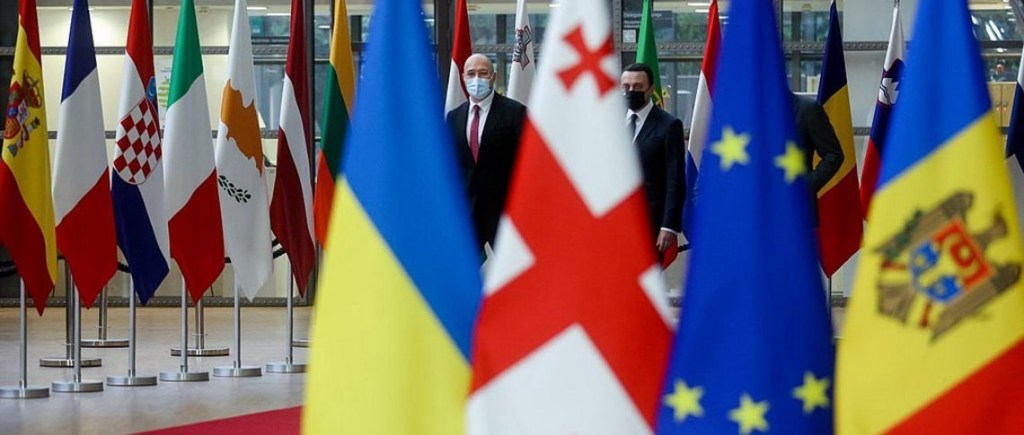
Moldova
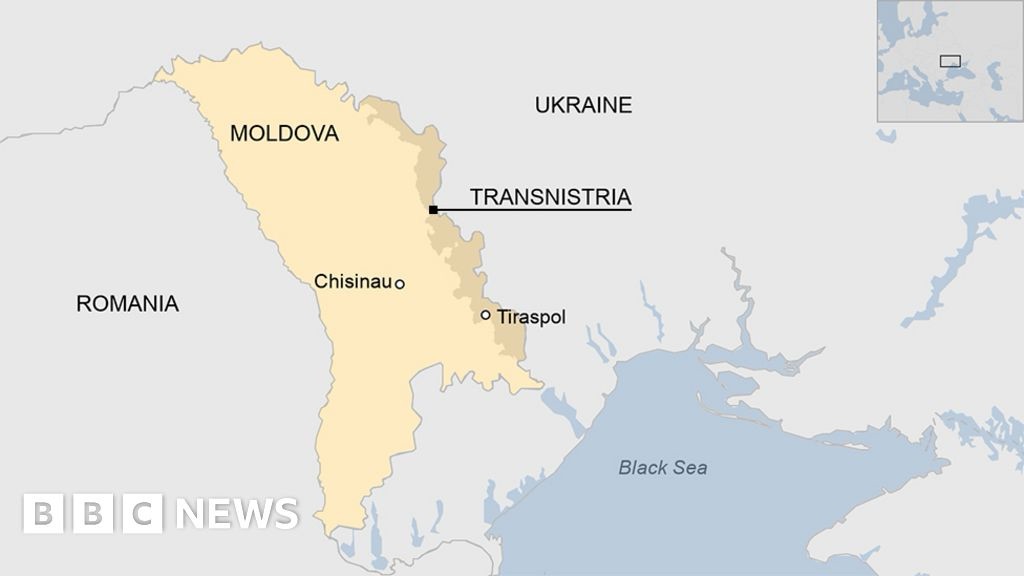
Moldova, as of January 2024 a country of 2.4 million people, essentially sandwiched between Romania to the west and Ukraine to the east, has been ruled by President Maia Sandu and her PAS party since the end of 2020. Amongst the priorities of President Sandu and her governments has been EU integration, in a stark contrast to her predecessor Igor Dodon who seemingly preferred closer ties with Moscow. Since the war in Ukraine began in February 2022, for example, Sandu has not only not been supportive of Russia’s aggressive actions, she has been outright supportive of Ukraine’s struggle, even expressing hopes that a Ukrainian triumph may lead to the solution of many of Moldova’s own problems, most notably the situation in Transnistria, a region recognised as a part of Moldova by international law, which however has been subject to control of pro-Russian separatists since the breakup of the USSR in 1991, and a highly contentious issue.
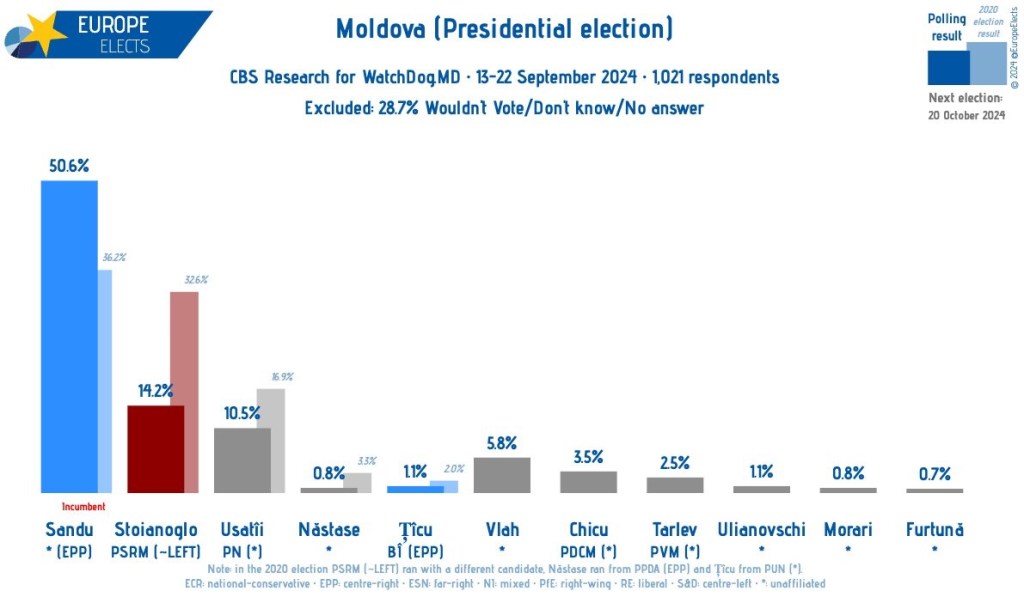
While according to recent polls President Sandu is leading by a lot, with there even being a possibility that she wins in the first round on 20 October (hence no need for a runoff on 3 November), as well as her PAS party having a chance to win the parliamentary elections next year by a landslide, it is almost guaranteed to be a bumpy ride.
Russian-orchestrated provocations, for example, are almost certain to take place. The fact that the presidential elections will be held together with a referendum on joining the EU, makes Moldova all the more of a target. Recently, for instance, Moldovan authorities warned that Moscow agents have formed an almost mafia-like structure to distribute cash in order to sway voters to vote against joining the EU. Large-scale disinformation or even violent provocations are also not to be excluded, especially in regions which are Moldovan according to international law, but de facto have Russian personnel exercising authority.
Georgia
Georgia, a country in the Southern Caucasus of 3.6 million people has in recent years had a significantly different story from Moldova. Georgia under former President Mikhail Saakashvili was invaded by Russia in 2008, with around 20% of Georgia’s territory still illegally occupied by Russia. Since 2012, Georgia has consistently been ruled by the Georgian Dream (GD) party, led by oligarch Bidzina Ivanishvili. While at the beginning GD did not start off as a pro-Russian government, throughout the years this has increasingly changed. Ivanishvili and his men have gone to openly accuse their own country of starting the 2008 war with Russia, under the direction of a “Global War Party”. Ivanishvili has suggested apologising to Russia and even a military tribunal for one of the current opposition parties which was in power in 2008.
What has sparked the most tension, perhaps, however was a recent law proposal by the GD government, a law on “foreign agents”, essentially a copy of a similar Russian law. This has led to thousands of protesters in Georgian cities, as due to this law Georgia’s EU accession may be in serious jeopardy.
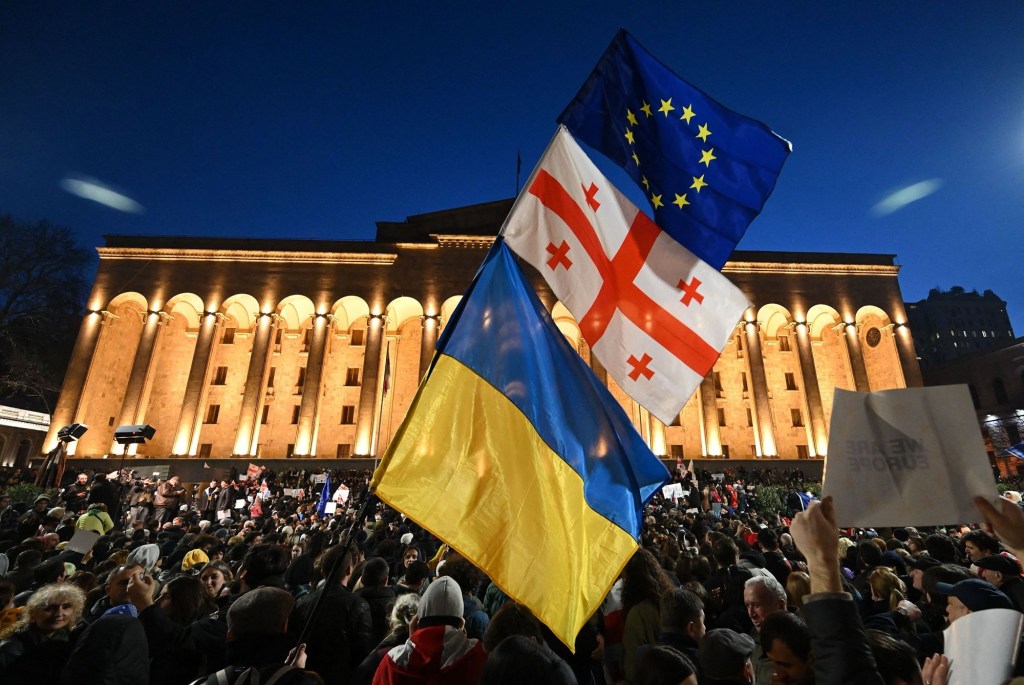
Regarding the upcoming election on 26 October, reputable opinion polls suggest the ruling party is losing popularity, at the expense of four opposition movements. There have been fears about the fairness of the vote. Nonetheless, it increasingly appears Georgia will be choosing between West and East.
The EU has meanwhile decided to publish its Enlargement progress report on 30 October after these elections, the results of which they would likely closely follow.
 Power & Politics Hub
Leave a comment